
Sudan’s Hunger Crisis Deepens as Millions Face Acute Food Insecurity
Conflict, displacement, disrupted food production and humanitarian funding shortages are leaving millions of people across Sudan facing severe food insecurity, with communities in Darfur and Kordofan among those at greatest risk.
Humanitarian Situation Report — Sudan
24 September 2026
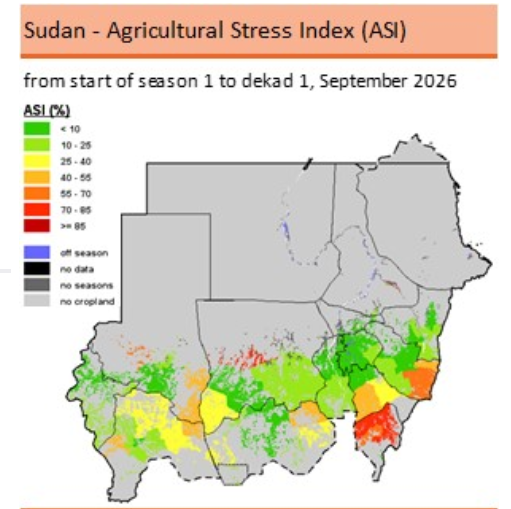
Sudan continues to experience an exceptionally severe food-security and nutrition crisis as conflict, displacement, disrupted agricultural production, high food prices and restrictions on humanitarian access undermine families’ ability to obtain sufficient food.
According to the Food and Agriculture Organization’s Sudan country update dated 3 September 2026, approximately 19.5 million people — more than 40 percent of the population analysed — were projected to experience Crisis-level acute food insecurity (IPC Phase 3) or worse between February and May 2026. This included approximately 5 million people at IPC Phase 4 (Emergency) and 135,000 people at IPC Phase 5 (Catastrophe). ([FAOHome]1)
The situation remains particularly concerning in conflict-affected parts of Darfur and Kordofan. FAO reports that 14 areas in North Darfur, South Darfur and South Kordofan were considered at risk of famine during the 2026 lean season under a worst-case scenario involving increased violence and displacement ([FAOHome]1)
The World Food Programme similarly reports that almost 19.5 million people face crisis levels of hunger, while some communities are already experiencing catastrophic conditions. WFP states that 825,000 children under five are expected to suffer severe acute malnutrition during 2026. ([World Food Programme]2)
Humanitarian assistance remains critical, but funding shortages are affecting the response. On 22 September, WFP reported that shrinking humanitarian funding was forcing reductions in food assistance affecting conflict-displaced populations. The agency highlighted Tawila in North Darfur, where nearly one million displaced people are located and many depend heavily on humanitarian assistance. ([World Food Programme]3)
Food insecurity cannot be considered separately from displacement and the deterioration of essential services. UNICEF reported that 33.7 million people required humanitarian assistance during 2026, including 17.3 million children, while more than nine million people were internally displaced according to figures contained in its mid-year situation report. ([UNICEF]4)
Continued insecurity also affects humanitarian organisations' ability to reach vulnerable communities. WFP reported in July that active conflict prevented lifesaving assistance from reaching an estimated 200,000 people during June alone. ([World Food Programme]5)
TYFA Humanitarian Observation
The available humanitarian evidence indicates that Sudan's food crisis is being driven by overlapping pressures rather than food availability alone. Conflict-related displacement, disruption of agriculture and markets, high prices, restricted humanitarian access and inadequate humanitarian funding are collectively increasing vulnerability.
Particular attention is required for displaced families, children suffering or at risk of acute malnutrition, pregnant and breastfeeding women, older people, people with disabilities, and communities that humanitarian organisations cannot regularly access.
The Youth Future Alliance (TYFA) calls for the protection of civilians and civilian infrastructure and for safe, sustained and unimpeded humanitarian access to populations in need. TYFA also emphasises the importance of supporting local humanitarian organisations and community networks that continue to operate close to affected populations.
Sources and verification
• Food and Agriculture Organization (FAO), GIEWS Country Brief: Sudan, reference date 3 September 2026. ([FAOHome]1)
• World Food Programme (WFP), Sudan Emergency, accessed September 2026. ([World Food Programme]2)
• World Food Programme, Sudan fallout: how shrinking aid is deepening one of the world's biggest hunger crises, 22 September 2026. ([World Food Programme]3)
• UNICEF, Sudan Humanitarian Mid-Year Situation Report 2026, reporting period 1 January–30 June 2026. ([UNICEF]4)
• World Food Programme, WFP warns El Obeid is becoming the new epicentre of Sudan's displacement and hunger crisis, 17 July 2026. ([World Food Programme]5)
Prepared by: The Youth Future Alliance (TYFA)
Reporting focus: Food Security and Nutrition — Sudan
Publication date: 24 September 2026
Website: theyfa.com